Questions? Comments? Email me!
SQUID CARE INSTRUCTIONS!
- first, you need a 30 year old oak branch
- it eats a diet of 5 oz of caviar daily
- you must prepare seedbrine for the tank
- add pecking fiber every 2 weeks
- it can only survive in a water where the pH is between 7.6 and 7.8
- you must use a grade 3 charcoal filter in the tank
- the water must be, on average, 34.58c degrees at all times
- Enclose a large room in your home with plexiglass.
- Lay an earthen floor, covered with appropriate low vegitation.
- Plant appropriate trees within the enclosure.
- Use mirrors mounted on rotating platforms to direct sunlight properly into the space.
- Insert small wildlife periodically so your octopus may feed, they prefer small to medium sized birds.
- Enjoy your 'Northwestern'
Place the oak branch in the tank. This branch with not only be your squid's home, but also its playground. A squid will burrow into the branch, creating an intricate domicile of unparalleled beauty.
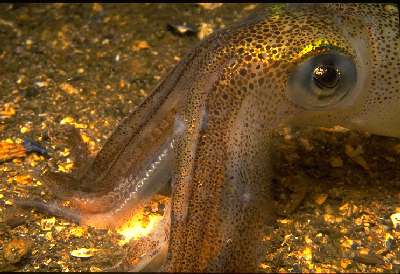
Squids eat caviar. The better the caviar, the better your squid will be. A well-fed squid is more likely to venture out on land, approximating a mammilian pet in a very satisfying way. Here is the type of caviar I feed my squid (pictured above, note the shiny coat).
Seedbrine is an integral part of any squidquarium. Without it your squid will be unhappy, not to mention unhealthy. If you want to maintain a squid of unprecedented quality, able to be entered in competition, you MUST maintain a tank with proper amounts of seedbrine!
Pecking fiber will allow the squid to keep its beak clean and sharp. A marvelous squid with a sharp beak is a joy to watch hunt. Drop an expired bird into the tank every couple of months and videotape the action! A good pecking fiber material can be garnered by running fine gravel through a rock tumbler for 3-5 weeks.
pH is a critical variable in the care of any aquatic animal. However, squid are especially susceptible to variances in pH. Tooth loss can result from improperaly monitorying the acidity of your squid tank. Do not make this mistake, a toothless squid is a squid unable to eat and a squid unable to eat will not eat.
Maintaining the clarity of your tank is as important as maintaining the pH. A grade 3 charcoal filter will allow everyone to see your squid and allow your squid to see and be seen by others. This will also ease your squid's breathing, which leads to stickier tentacles and better grooming.
Finally, temperature is probably the greatest single factor contributing to failed squid care! It is critical that you use a digital thermometer/heater combo to maintain consistent water temperate! Your squid will not thrive if these requirements are not met. Although they are stringent, the benefits are manifest in the proud specimen of squid you will keep!
Happy squid are satisfying squid!
Here is a picture of me catching a Northwestern Tree Octopus! My wife Wilhelmina and I went on vacation in the pacific northwest recently, just hoping to catch a glimpse of one of these. Well, once you see one, you pretty much have to own one. Look at that plumage!
As you can see, we're putting it into a burlap sack. Burlap is a treat for a cephalopod. They roll and squirm all over it, cleaning their glossy coats. Beautiful, simply beautiful.
Caring for a 'Northwestern', as they are often referred to, is somewhat different than caring for a squid. Instead of a carefully controlled water environment, I had to construct an indoor terrarium, replete with a redwood imported from this little guy's home range.
Steps for building a suitable habitat for your tree octopus:
Questions? Comments? email me!